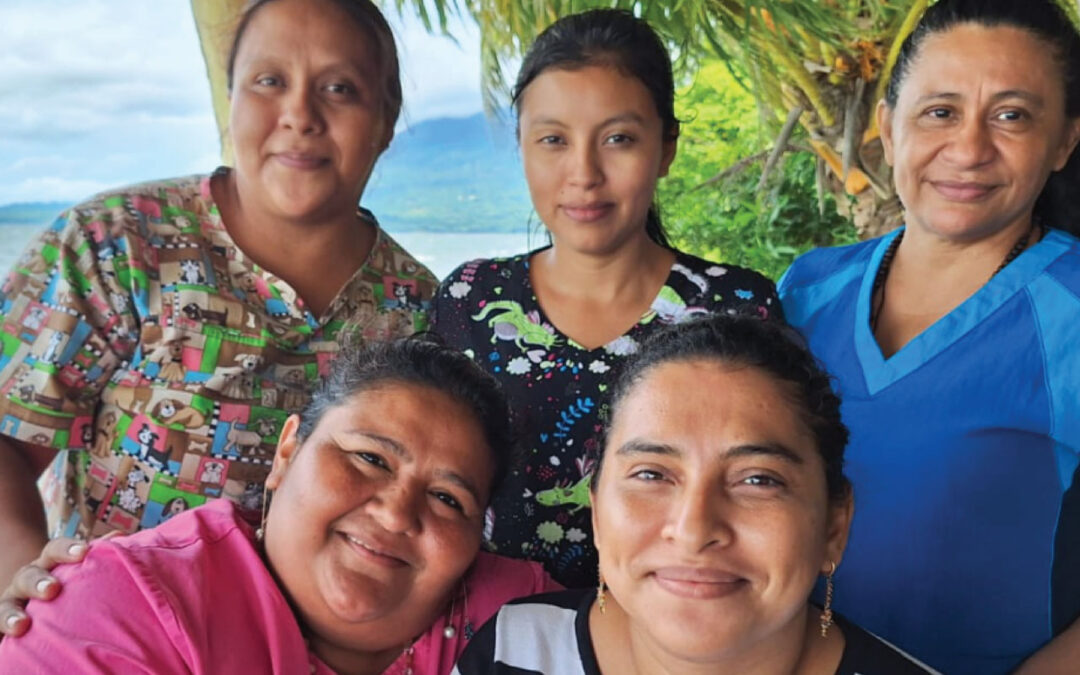
On the Nicaraguan island of Ometepe, two Rotary-funded programs tackle very different challenges: one teaches deaf children to communicate for the first time, and the other helps women heal from trauma. Both run through BOSIA, the nonprofit behind the Bainbridge-Ometepe Sister Island Association, and both depend on funding the Rotary Club of Bainbridge Island provides through World Community Service.
Finding a language
 An unusually high number of children on Ometepe are born deaf or hard of hearing. For years, many grew up without formal language, relying on makeshift family gestures that left them isolated from their communities.
Brenda Berry, a professional photographer, joined BOSIA after her daughter came home from a high school trip describing the island’s community. Berry connected with Dale Spoor, who had started a special needs program there, and learned that Nicaraguan Sign Language, or ISL, was still taking shape as one of the youngest developing languages in the world.
“The deaf kids and their families would make up ad hoc symbols for what they needed or wanted, but there was no formal incorporated language,” Berry said.
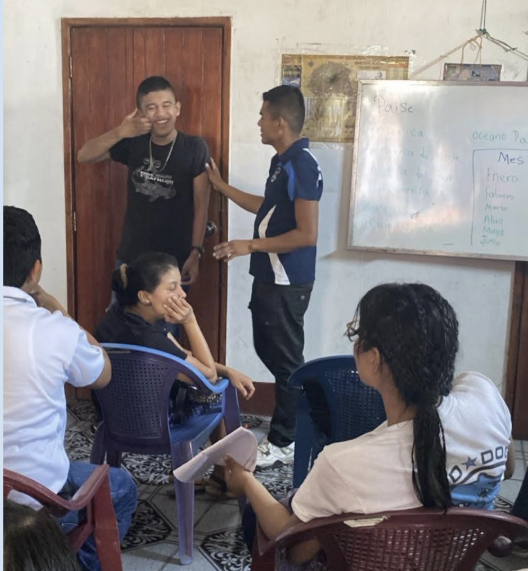
With club support, BOSIA now runs a weeklong, intensive sign language course during school holidays. Native deaf signers Daphne Tamara Rodriguiez Chang and Tomasa Gonzalez Rizo teach vocabulary and grammar alongside geography, history and storytelling — subjects students couldn’t access before they had a shared language.
Students who once struggled to communicate now walk confidently into local shops and talk with shopkeepers, Berry said. Christian Maximo Bucardo Garcia joined the program at age 5; now in his early 30s, he mentors younger students. Others have built careers: Jose Santos completed a sponsored tailoring course, Rizo and Chang trained as beauticians, and Garcia went to culinary school.
BOSIA also connects the deaf program with its visually impaired students. This summer, coordinator Francisco Antonio Hernández organized a joint outing to the island’s two volcanoes, where deaf students built clay models for blind students to explore by touch.
“It’s a very direct, immediate, measurable improvement in their lives,” Berry told Rotarians. “It’s not something we could do without your support.”
Healing together
Carol Carley opened her presentation by quoting a participant in a BOSIA women’s therapy group: “As women, we have suffered a life where we have been made to feel less valued. But when we remember that pain, and you tell us that we are valued, and we are strong, it’s true.”
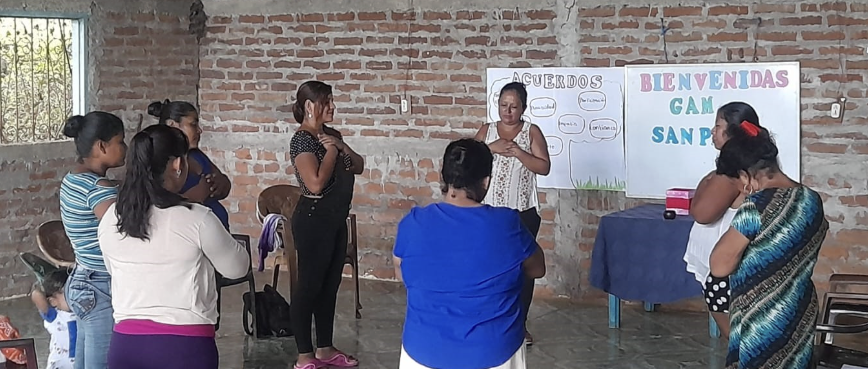 Teen suicide and teen pregnancy persist on Ometepe, worsened by a culture that abandons young pregnant women once a partner leaves. A local psychologist built structured therapy groups to help women process trauma and rebuild agency.
Groups now meet in 11 communities, each with about 10 participants, led by a psychologist and trained peer facilitators who travel by bus, bicycle, motorcycle, truck, foot or horseback. Over 10 sessions, women work through trauma using a workbook; one illiterate participant had a family member read it aloud so she could memorize the material.
Karla Varela, a sexual abuse psychologist in Altagracia, has led the project for eight years and trained four more psychologists to deliver the model across the island. Rotary funding covers stipends, transportation and snacks. Attendance runs around 70%.
Carley recalled sitting in on a session where all eight women had lost a child to suicide. “Because of the support that you here today have given to these people, it literally has been saving their lives,” she told the club.
The club continues to support BOSIA and is seeking additional funding partners to sustain and expand both programs.
###
by Nancy Treder